In this article
Updated in November 2026.
Shape is the first thing to decide when choosing a padel racket, before brand or design. It determines the size and position of the sweet spot, the area of the face where the ball comes off best, and where the weight is concentrated, that is, the balance.
There are three basic shapes: round, teardrop and diamond. We explain what each one offers and who it is for.
The three shapes at a glance
Round is the easiest and gives the most control; diamond is the most powerful and demanding; teardrop sits in between. As a general rule: round to start with, teardrop once you have a certain level and diamond only if your technique lets you make the most of it.
| Shape | Sweet spot | Balance | Who it is for |
|---|---|---|---|
| Round racket | The largest | Low, close to the handle | Beginners or those who prioritise control |
| Teardrop racket | Intermediate | Medium | Varied game; those moving up from a round racket |
| Diamond racket | Reduced | High, towards the head | Players with good technique looking for power |
Round racket

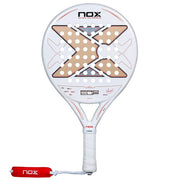
This is the shape with the largest sweet spot and with the weight closest to the handle, which makes shots easier to control and the racket easier to move. It is the one recommended for beginners and for those who prioritise control, but it is not only a beginner’s shape: many advanced players choose it for its manoeuvrability. One example is Miguel Lamperti’s Nox ML10 Pro Cup, a round advanced-level racket.
See the Nox ML10 Pro Cup by Miguel Lamperti 27 · See all round rackets
Teardrop racket

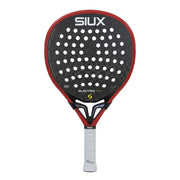
This is the middle ground: its sweet spot is somewhat smaller than that of a round racket and its balance is centred, so it gives more power than a round racket and is more manageable than a diamond. It suits players with a varied game and those coming from a round racket who want more punch without losing handling. One example is Franco Stupaczuk’s Siux Electra Pro, an all-round racket.
See the Siux Electra Pro 2026 · See all teardrop rackets
Diamond racket

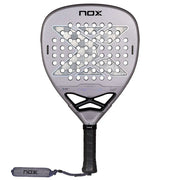
It concentrates the weight towards the head of the racket, which adds force to shots, especially the smash. In return, its sweet spot is smaller and it is the hardest shape to control: it gives maximum power but demands clean hitting. It is for players with good technique. One example is Agustín Tapia’s Nox Genius Attack 18K Alum.
See the Nox Genius Attack 18K Alum by Agustín Tapia 27 · See all diamond rackets
What about rackets with other shapes?
Some brands have their own shapes based on these three. Bullpadel, for example, uses a geometric frame (Geo Shape) that is wider in key areas to enlarge the contact surface. In those cases it is worth looking at the balance and the level the brand indicates.
Shape and balance are not the same thing
Shape influences balance but does not fully decide it: two teardrop rackets can have different balances depending on how the manufacturer distributes the weight. If you are torn between two models of the same shape, look at the balance: low for more control and manoeuvrability, high for more power.
How to choose according to your level
- Beginner: round. See our beginner padel rackets.
- Intermediate: round or teardrop, depending on whether you want control or a little more punch. See the intermediate padel rackets.
- Advanced: any of the three, depending on your style: control rackets or power rackets.
Frequently asked questions
Which racket shape is best to start with?
Round: it has the largest sweet spot and is the easiest to control.
Which racket shape gives the most power?
Diamond, because it concentrates the weight towards the head. In return, it is the hardest to control.
Is a teardrop racket for control or for power?
It is the middle ground: more power than a round racket and more handling than a diamond.
Do professionals play with round rackets?
Yes, some do. Miguel Lamperti’s Nox ML10 Pro Cup, for example, is round.